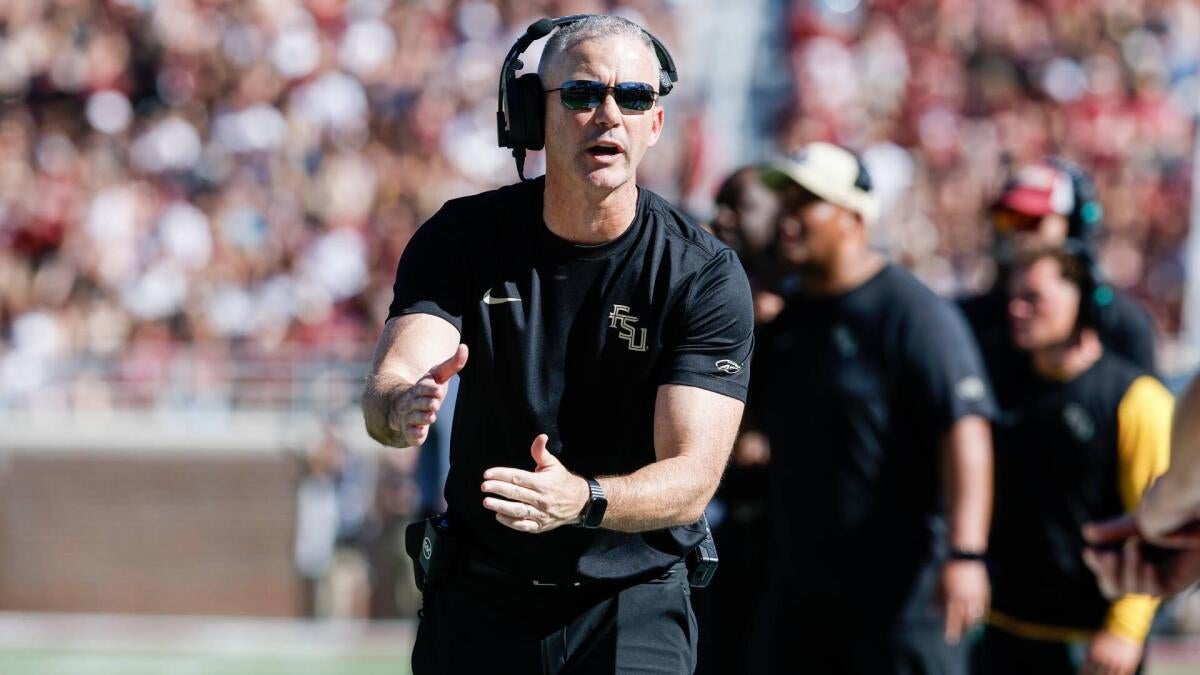
College football coaching buyouts often generate headlines with eye-popping figures, but the actual cost to a school is frequently far lower than the sticker price. While SEC programs like Texas A&M owe Jimbo Fisher $76.8 million fully guaranteed and Auburn paid Gus Malzahn $21.4 million, the dynamics at the Group of Six level reveal a more nuanced financial calculus. Sam Houston State's firing of offensive coordinator Phil Longo in October illustrates how mitigation clauses, offset language, and ticket revenue pressures shape the real cost of a coaching change.
Mitigation Clauses Reduce Actual Payouts
Longo signed a five-year deal with a 2025 salary of $725,000 ($700,000 base plus $25,000 supplemental) and maximum incentives of $950,000. After his dismissal, he is owed the remainder of his 2026 salary plus base salaries for 2027 and 2028 — roughly $1.53 million total — plus $50,000 in supplemental income, paid monthly. However, his contract includes a standard mitigation clause: for every dollar Longo earns from a new coaching job during the buyout period, Sam Houston reduces its obligation dollar for dollar. If he secures a Power Four coordinator role paying more than the remaining buyout, the school could owe nothing. This offset mechanism is boilerplate across the industry, designed to prevent situations like Texas A&M's massive payout to Fisher.
Schools Scrutinize New Contracts to Prevent Offset Manipulation
Industry sources say schools have become adept at closing loopholes. One agent described the old school as "the bank" — coaches must stay on good terms to collect. Contracts now often prohibit structuring a new deal to defer compensation in a way that artificially lowers the offset in early years. For example, a school may block a new employer from paying $500,000 in year one and $1.5 million in year two to average $1 million annually, which would reduce the old school's offset in year one. Group of Six programs in particular "nickel and dime" the details, demanding copies of the new contract and verifying income, sometimes even requesting tax returns.
Financial Pressures Influence Firing Decisions
The decision to fire a coach goes beyond wins and losses. Athletic directors weigh political capital, overall budgets, and revenue generation. The median Group of Six athletic department budget is about $44 million; Sam Houston's expenses in fiscal 2025 were $42 million. Without the massive television contracts of the Power Four, ticket revenue becomes critical. Consultant KC Smurthwaite notes that some Group of Six schools expect $300,000 to $500,000 per home game in single-game ticket sales, with each attendee spending an average of $21 on concessions and parking. If fan apathy toward a struggling coach leads to half-empty stands for three or four remaining home games, the lost revenue can approach $500,000–$600,000. In that context, a $1.5 million buyout may be justified if a change revives ticket sales and offsets the cost over time. As Smurthwaite puts it, schools ask: "Can we actually just make that money back with the opportunity cost to hey, we're actually losing more money by being patient, and we're going to make a change?"
Whether at Texas A&M in College Station or Sam Houston in Huntsville, the coaching carousel remains an expensive ride — but the true cost is always relative to the program's resources and the fine print in the contract.


